TRANSITIONS - February 27
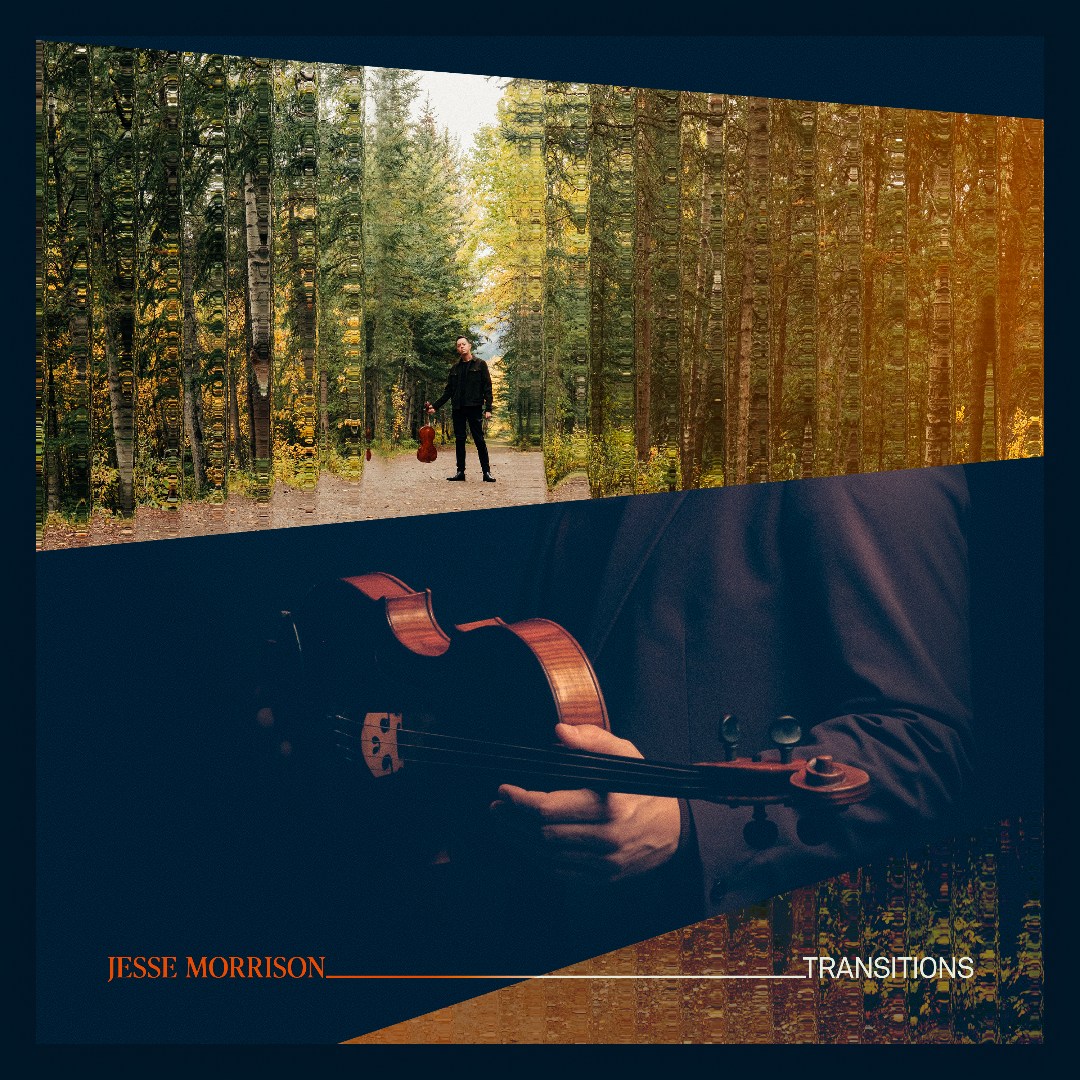
With his debut solo album Transitions, violist Jesse Morrison steps forward with a voice both intimate and far reaching, offering a portrait of the viola as a living, breathing storyteller. The title reflects more than technical change. It speaks to emotional passage, stylistic contrast, and the instrument’s rare ability to inhabit multiple eras at once. Across this program, the viola becomes a shape shifter, moving through tenderness and volatility, solitude and urgency. Morrison’s playing reveals a deep respect for the instrument’s natural gravity while allowing its expressive spectrum to unfold with clarity, patience, and purpose.
The album begins with a newly commissioned work, Partita for Solo Viola by composer Derek David, written in reverence to the unaccompanied master pieces of Johann Sebastian Bach. Rather than imitation, David offers conversation. His Partita draws on personal experiences shaped by friendship, love, devotion, alienation, longing, mental illness, and tragedy during a specific period of his life. These emotional states are translated into music of striking intimacy, where lyricism and fracture coexist. Morrison guides the listener through this landscape with unforced authority, allowing each movement to breathe, to question, and ultimately to resolve in its own quiet eloquence.
The album also presents the debut recording of Brett Dean’s Skizzen für Siegbert (2011). Premiered in Berlin in 2012 as the compulsory piece for the Max Rostal Viola Competition, the composition frames reflection around velocity. The outer movements, contemplative and mournful in character, therefore frame a central virtuosic, relentlessly driving perpetuum mobile. Morrison captures this architecture with remarkable balance. The reflective passages speak with vulnerability, while the virtuosic core surges with controlled intensity, revealing both the athletic and poetic dimensions of the instrument.
Further depth arrives through selections from György Kurtág’s Signs, Games and Messages,a collection of concentrated musical aphorisms that distill gesture into its purest form. Each miniature becomes a moment of speech rather than spectacle. Morrison approaches these works with sensitivity and restraint, shaping silence as carefully as sound. The program closes with a viola transcription of Georg Philipp Telemann’s Fantasia No. 1 in E flat, reconnecting the modern ear to baroque clarity, dance, and rhetorical elegance. In Telemann,articulation becomes architecture, and Morrison’s phrasing honors both line and character with refined poise.
Throughout Transitions, Jesse Morrison draws a living thread between baroque and contemporary music, revealing their shared language of gesture, form, and rhythmic vitality. The album becomes a dialogue across centuries, spoken through an instrument often underestimated yet endlessly expressive. With this release, Morrison introduces himself not only as a virtuosic performer, but as a thoughtful curator of sound worlds, inviting listeners into a space where past and present converse with uncommon intimacy and grace.